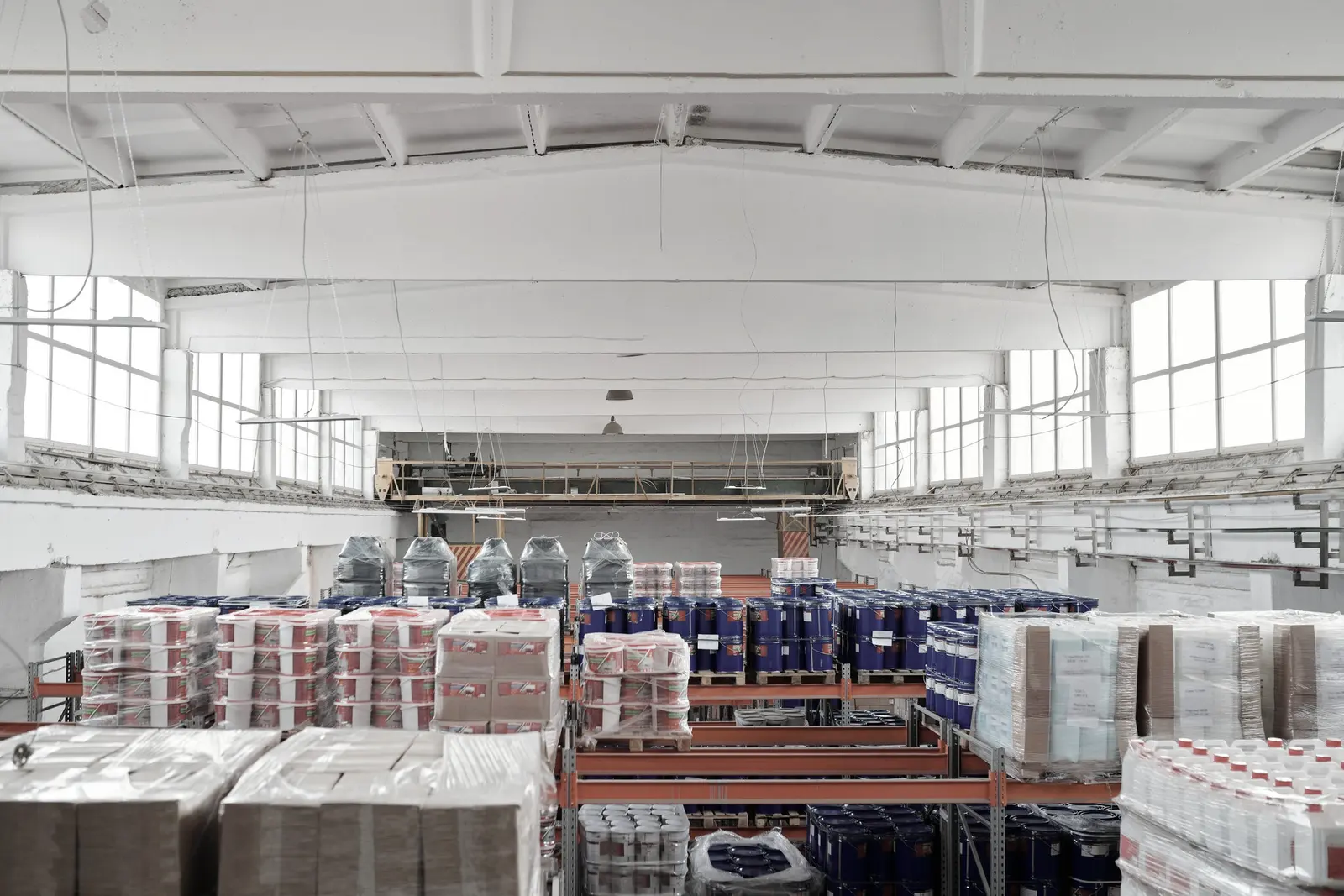
Logistics real estate is property used to store, sort and distribute goods: large distribution centres along motorways, regional warehouses, cross-dock facilities and smaller last-mile units close to cities. Owners earn rent from logistics operators, retailers, manufacturers and online sellers under commercial leases. Funds buy warehouses because they can offer long leases to business tenants and relatively simple buildings, but this does not make them free of risk. The value of a logistics property depends heavily on its location and transport links, the quality and flexibility of the building, the financial strength of the tenant and the terms of the lease. Demand can weaken, tenants can leave, and older buildings can lose appeal.
What is logistics real estate?
The segment includes several types of buildings with different roles in the supply chain:
- Distribution centres. Large warehouses, often near motorway junctions, that serve a whole region or country. Goods arrive in bulk and leave in smaller shipments.
- Regional and urban warehouses. Medium-sized buildings that supply a city or area.
- Last-mile units. Smaller properties close to or within urban areas, used for the final step of delivery to shops or consumers.
- Cross-dock facilities. Buildings where goods are transferred between vehicles with little storage time.
- Specialised facilities. Temperature-controlled warehouses for food or pharmaceuticals, or buildings with heavy automation.
Logistics belongs to the wider commercial real estate market, often together with light industrial property.
Why do funds buy warehouses?
Funds are attracted by a few general characteristics. Warehouses are usually simpler to build and maintain than offices or shopping centres. Leases are often long, and many tenants are large companies. A single building may be let to one tenant, which keeps management straightforward. Demand for logistics space is linked to how goods are produced, sold and delivered, including online retail, changes in supply chains and the wish of companies to hold more stock closer to customers.
These are general drivers, not forecasts. Demand for logistics space can slow when consumption weakens, when tenants consolidate their networks or when a lot of new space is built in the same area.
How are logistics leases structured?
Logistics leases are commercial leases. Common features, in general terms, include:
- Single tenant per building. Many warehouses are let to one occupier, which simplifies management but concentrates risk.
- Longer terms. Large distribution centres are often let on longer leases, sometimes with break options.
- Indexation or rent reviews. Rent may be adjusted periodically by reference to an index or by agreed steps.
- Cost allocation. The tenant often bears most running and maintenance costs, although major structural repairs may stay with the owner.
- Tenant fit-out. Tenants may install racking, automation or cooling equipment, which can bind them to the location but also makes re-letting more complex if they leave.
The details matter for net income. See rental yields for the difference between gross and net figures.
What are the risks of logistics property?
| Risk | Description |
|---|---|
| Tenant risk | With a single tenant, the loss or failure of that tenant can remove all income from the building |
| Re-letting risk | Large or specialised warehouses may take time to re-let and may need investment first |
| Location risk | Poor transport links or changes in road and rail networks reduce attractiveness |
| Obsolescence | Low clear heights, limited loading docks, weak floors or poor energy performance can make older buildings less competitive |
| New supply | New construction nearby can increase competition for tenants |
| Interest rates | Higher rates can reduce values and raise borrowing costs |
| Liquidity and valuation | Sales take time, and valuations are estimates that may lag the market |
What drives the value of a warehouse?
Location and transport links. Access to motorways, rail terminals, ports, airports and large population centres is often decisive. For last-mile units, closeness to customers matters more than size.
Building specification. Clear internal height, floor strength, number of loading doors, yard space for trucks, sprinklers and power supply all affect how useful the building is for modern operations.
Energy and sustainability. Insulation, roof suitability for solar panels and energy ratings affect running costs and tenant interest, and may require future investment.
Tenant and lease. A financially strong tenant on a long lease supports value. A short remaining lease or a weak tenant reduces it.
Alternative use. A building that could be let to a different type of occupier, or divided, gives more options if the current tenant leaves.
How do funds hold logistics properties?
A real estate fund usually owns warehouses directly or through property companies, often one per building. Some funds focus only on logistics; others hold warehouses alongside offices and retail. The fund collects rent, pays non-recoverable costs, may borrow and reports values set by valuers. See how a real estate fund works.
For an ELTIF, the regulation limits a single real asset to no more than 20 % of capital, which caps how much one large distribution centre can weigh in the portfolio. Borrowing is limited to 50 % of NAV for ELTIFs open to retail investors and 100 % of NAV for those offered only to professional investors. The earlier requirement that each real asset be worth at least EUR 10 000 000 was removed by ELTIF 2.0, which makes smaller last-mile units eligible regardless of size.
A practical example
A hypothetical fund owns a large distribution centre let to one logistics operator and four smaller urban warehouses let to different tenants. The operator reorganises its network and decides not to renew its lease at expiry. The fund will lose the largest single source of rent and must find a new tenant for a building with racking designed for the previous occupier. The urban warehouses continue to produce income, which softens the effect on the whole fund. Before re-letting, the fund decides to invest in new loading doors and an energy upgrade. The example shows how single-tenant exposure, building specification and diversification interact.
What should I check as an investor?
- What share of the fund's rent comes from logistics, and from the largest tenants?
- When do the main logistics leases end, and are there break options?
- Where are the properties located relative to transport routes and population centres?
- What is the age and specification of the buildings, and is capital spending planned?
- How much does the fund borrow, and when does the debt mature?
The guide to real estate fund risks covers how these points appear in fund documents, and the checklist tool helps you record the answers.
Frequently asked questions
What is logistics real estate as an investment?
It is investment in buildings used to store and move goods, such as distribution centres and last-mile warehouses. The investor earns income from leases with logistics operators, retailers and manufacturers.
Why do funds buy warehouses?
Warehouses are often relatively simple buildings let on longer leases to business tenants, which can make income predictable while the tenant pays. Demand depends on how goods are produced, sold and delivered, and it can change.
What are the risks of logistics property?
The main risks are dependence on a single tenant, re-letting after a tenant leaves, poor location, building obsolescence, new competing supply and higher interest rates.
What is a last-mile warehouse?
It is a smaller logistics building close to or within a city, used for the final step of delivering goods to shops or consumers. Its value depends mainly on its proximity to customers.
How are logistics leases structured?
They are commercial leases, often with one tenant per building, longer terms, rent reviews or indexation and many running costs borne by the tenant. The exact terms differ from lease to lease.
Primary sources
- Regulation (EU) 2015/760 on European long-term investment funds, EUR-Lex (2026-10-01)
- Regulation (EU) 2023/606 amending Regulation (EU) 2015/760 (ELTIF 2.0), EUR-Lex (2026-10-01)
General information. Not investment advice or a suitability assessment.