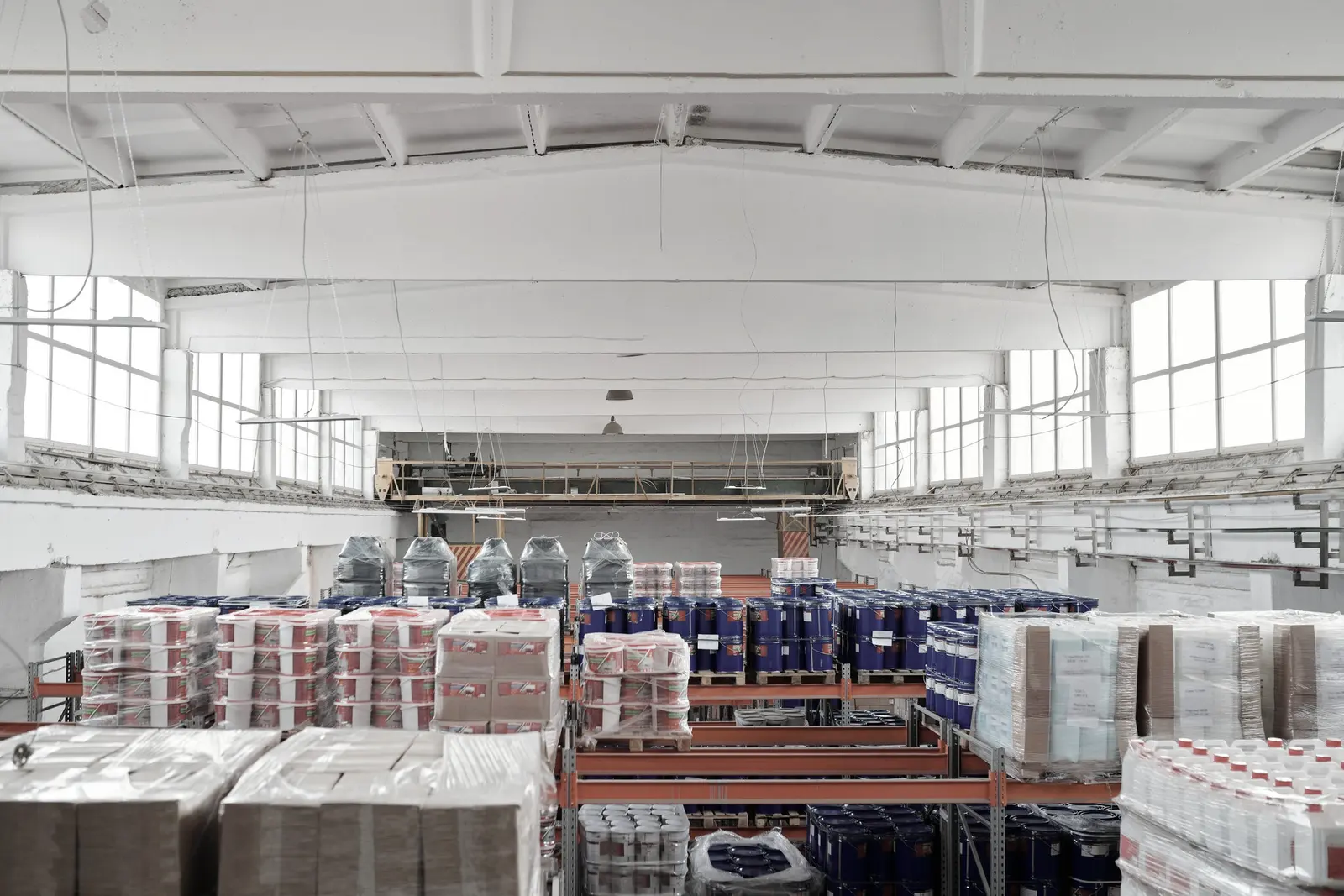
Commercial real estate is property that businesses use to operate, such as offices, shops and retail parks, logistics warehouses, hotels and other specialised buildings. It earns money mainly through leases: business tenants pay rent to the owner under contracts that are often longer and more detailed than residential tenancies. Its value depends above all on where the property is, who rents it, how long the leases run and what condition the building is in. For a private investor, the most common route into commercial property is a real estate fund, which owns buildings directly or through property companies. The income can be steady, but it is never certain: tenants can leave or fail, buildings age, and values can fall.
What is commercial real estate?
The term covers property used for business rather than for living. The main segments are:
- Offices. Buildings where companies and public bodies have their workplaces. See office real estate.
- Retail. High street shops, shopping centres and retail parks. See retail parks.
- Logistics and industrial. Warehouses, distribution centres and light industrial buildings. See logistics real estate.
- Other. Hotels, care homes, data centres, student housing and similar specialised assets, which often depend on a single operator.
Each segment has its own tenants, lease customs and risks. A fund that calls itself a commercial property fund may focus on one segment or combine several.
How is commercial real estate different from residential property investing?
Residential property is rented to households, usually on shorter tenancies with strong legal protection for tenants. Commercial property is rented to businesses, and the relationship is governed mainly by the lease contract. Commercial leases tend to be longer, rents are often linked to an index, and tenants may bear more of the building's running costs. On the other hand, a single commercial tenant can represent a large share of a building's income, so the loss of one tenant has a larger effect. Fitting out a vacant commercial unit for a new tenant can also be costly and slow.
How do commercial leases work?
A lease sets out the rent, the length of the contract, any break options that let the tenant leave early, how the rent changes over time and who pays which costs. In general terms:
- Rent and indexation. Many commercial leases adjust rent periodically, for example by reference to a price index or through agreed steps. The exact mechanism matters, because it decides how far income keeps up with rising costs.
- Lease length and breaks. A long lease gives more predictable income, but only as long as the tenant is able to pay. Break options shorten the effective length.
- Service charges and recoverable costs. Some leases pass most running costs to the tenant; others leave more costs with the owner. The difference directly affects net income.
- Incentives. Rent-free periods or contributions to fit-out are common when letting space. They reduce effective income in the early years of a lease.
Vacancy is the other side of the picture. When space is empty, the owner earns no rent from it but still pays costs such as maintenance, insurance and taxes. The difference between gross and net income is explained in rental yields.
What drives the value of a commercial property?
Valuers and investors look at a recurring set of factors:
| Factor | Why it matters |
|---|---|
| Location | Access, transport links and the strength of the local economy affect demand from tenants |
| Tenant quality | A financially strong tenant is more likely to pay rent for the whole lease |
| Lease length and expiry profile | Longer remaining leases give more visible income; many expiries at once raise re-letting risk |
| Building condition and specification | Modern, efficient buildings are easier to let; older ones may need investment |
| Energy performance | Energy standards affect running costs, tenant demand and future refurbishment needs |
| Flexibility of use | A building that can be adapted to other uses has more options if demand changes |
Value is also influenced by the general level of interest rates and by how much investors are prepared to pay for a given income. When financing becomes more expensive or investors demand a higher return, values can fall even if the rent is unchanged. Valuations are estimates made by valuers, not prices achieved in a sale. See valuation.
What are the main risks of commercial real estate?
- Tenant default. A tenant can get into financial difficulty and stop paying.
- Vacancy and re-letting. When a lease ends or a tenant leaves, finding a new tenant can take time and may require incentives or capital spending.
- Concentration. A building, or a whole fund, may depend on a small number of tenants or on one sector.
- Obsolescence. Changing needs of tenants, new technology or stricter energy standards can make a building less attractive.
- Interest rates and borrowing. Higher rates can reduce values and increase the cost of debt.
- Illiquidity. Selling a commercial building takes time, and a forced sale may be at a discount.
- Valuation uncertainty. Reported values are estimates and can lag behind changes in the market.
These risks apply whether you own a property directly or through a fund, although a fund can spread some of them across several buildings.
How do funds hold commercial property?
A real estate fund normally owns buildings either directly or through special purpose companies that each hold one or more properties. The fund collects rent, pays costs, may borrow against the properties and distributes or reinvests income according to its rules. The general mechanics are explained in how a real estate fund works.
If the fund is an ELTIF, the ELTIF Regulation sets limits. At least 55 % of capital must be in eligible investment assets, and no more than 20 % of capital may be in a single real asset. Borrowing is capped at 50 % of NAV for ELTIFs that can be sold to retail investors and 100 % of NAV for those sold only to professional investors. ELTIF 2.0 also removed the earlier requirement that each real asset be worth at least EUR 10 000 000.
A practical example
A hypothetical fund owns three commercial buildings: an office in a city centre, a warehouse near a motorway junction and a small retail park. In one year, a large office tenant uses a break option and leaves. The fund continues to receive rent from the warehouse and the retail park, but the office now produces no income while the fund pays to refurbish the space and offers a rent-free period to attract a new tenant. The valuer lowers the office value to reflect the vacancy. The example shows how one lease event can affect income and value, and why the spread of tenants and lease expiries matters.
What should I check as a fund investor?
- Which segments and countries does the fund invest in, and how concentrated is it?
- Who are the largest tenants, and what share of rent do they represent?
- When do the main leases expire, and do tenants have break options?
- How much vacancy is there, and how has it changed over time?
- How much does the fund borrow, and when does the debt mature?
- How often are properties valued, and by whom?
The checklist tool can help you note these questions and the answers you receive.
Frequently asked questions
What is commercial real estate?
It is property used by businesses, such as offices, shops, retail parks, logistics warehouses and specialised buildings like hotels. It is rented to business tenants under commercial leases.
How do I invest in commercial real estate?
You can buy a property directly, which usually requires significant capital and active management, or invest through a fund that owns several properties. Funds spread some risks but bring costs and, in many cases, limited liquidity.
How do commercial leases work?
A commercial lease sets the rent, the term, any break options, how rent changes over time and who pays the running costs. The details determine how stable and predictable the income is.
Can a commercial property fund lose value?
Yes. Values can fall because of vacancy, tenant failure, building obsolescence or higher interest rates. Borrowing in the fund can magnify such losses.
What is the difference between residential and commercial property investing?
Residential property is let to households, usually on shorter tenancies. Commercial property is let to businesses on longer, more detailed leases, which can give steadier income but greater dependence on individual tenants.
Primary sources
- Regulation (EU) 2015/760 on European long-term investment funds, EUR-Lex (2026-10-01)
- Regulation (EU) 2023/606 amending Regulation (EU) 2015/760 (ELTIF 2.0), EUR-Lex (2026-10-01)
General information. Not investment advice or a suitability assessment.